Do Carpenter Bees Sting You?
While female carpenter bees do have stingers, they are docile and rarely sting unless directly provoked, handled or swatted.
Males, however, may appear aggressive when they are buzzing around looking for mates or protecting their nests, but male bees are quite harmless because they do not have stingers.
Carpenter Bee Habits
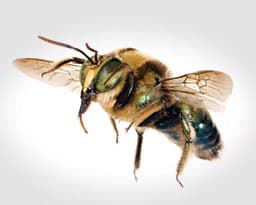
Most species of carpenter bees are all black, or mostly black with some yellow or white coloring. These hard-working bees are commonly mistaken for bumblebees, though most carpenter bees have a shiny abdomen instead of a fuzzy one. Apart from bumblebee queens, they are the largest native bees in the U.S.
Unlike bumblebees, carpenter bees are solitary insects. Female carpenter bees chew tunnels into wood to build nesting galleries, depositing the chewed frass outside their tunnels. This kind of nesting behavior weakens wood structures and creates minor surface damage.
Though some species are solitary, carpenter bees are often gregarious and create nests near each other. Though males do not have a stinger, they vigorously guard the entrance of the nests, causing unnecessary alarm for humans living nearby.
Carpenter bees hibernate during the winter and mate in the spring — cleaning out old holes and enlarging them to create new brood chambers for their young. Each female creates six to eight chambers, depositing her eggs on top of “bee bread,” a mixture of pollen and regurgitated nectar. Larvae typically hatch in August to feed on nearby nectar, before returning to their tunnels for winter.
Where Do Carpenter Bees Live?
Carpenter bees love to make homes in windowsills, doors, roof eaves, shingles, railings, telephone poles, and even wooden lawn furniture. If you see a bumblebee-like insect flying under the eaves of your home or hovering in one spot, chances are you’ve spotted a carpenter bee.
These builders tunnel into bamboo, hard plant materials, and deadwood, like wooden siding, to form their nesting caverns. Their handiwork is easy to spot because they drill perfectly round half-inch holes, usually against the grain of the wood.
What Attracts Carpenter Bees?
Carpenter bees are attracted to weathered or uncoated wood and will often build nests in the soft, damp wood of decks, moldings, and outdoor furnishings.
What Do Carpenter Bees Eat?
Carpenter bees do not eat wood: when not in their tunnels, they feed on pollen and plant nectar from nearby flowers.
Are Carpenter Bees Harmful?
Though they do not pose a public health threat, carpenter bees can damage wood through their nest building, and cause structural damage to beams and furnishings around your home.
While the damage to your property may appear cosmetic, over the years these tunnels will expand and branch out, causing considerable structural damage and staining the wood.
Adding to the issue, woodpeckers love to eat carpenter bee larvae, so much of the damage you see could be the result of woodpeckers trying to break into carpenter bee nesting tunnels and chambers. If you spot a woodpecker on your home, you may have a carpenter bee infestation.
Preventing a Carpenter Bee Infestation
Carpenter bees prefer bare wood, so painting and staining wood can sometimes deter an infestation. Citrus spray, lavender oil, tea tree oil, and almond oil are also effective deterrents.
Since it does not contain wood, vinyl siding can be a good option for keeping carpenter bees away from your home. Hardwoods like oak, ash, and maple also prevent carpenter bee attacks since they are too dense for boring.
To keep carpenter bees from returning, replace any damaged wood, keep wood painted and well maintained, and look out for new holes.
Getting Rid of Carpenter Bees
To get rid of a carpenter bee infestation, you can vacuum them out of their nesting holes or use bee sprays, diatomaceous earth, or boric acid to kill larvae before they hatch. While the adults are out foraging, and after the larvae have been treated, cover the nesting holes with duct tape, steel wool, caulk, or putty to prevent exits and entries.
Treat in the spring when they first emerge, and again in midsummer to get rid of any remaining bees that might survive the winter. In the fall, fill the holes with wood putty or wooden dowels and have the entire surface painted or varnished.
If carpenter bees are eating you out of house and home, don’t hesitate to call the professionals at Arrow. Fill out the form below to make your house feel like home again.