

Call to Schedule Service Today!
Mon – Fri: 8:00 AM – 5:00 PM
While there is some debate on the origins of the corn snake name, many believe that it comes from the similarity of the markings on the snake’s belly to the checkered patterns of kernels of maize. These non-venomous snakes are among the most popular pet snakes, second to the ball python. When threatened, they mimic their much more dangerous relative, the rattlesnake, by shaking their tails.
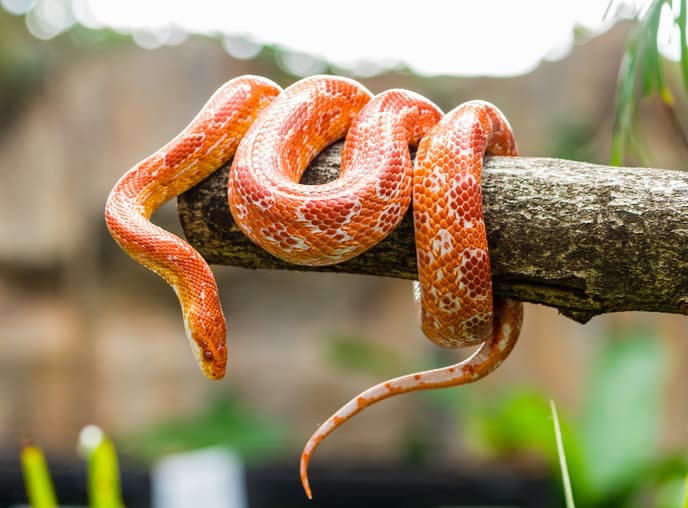
Corn snakes are carnivorous and mostly stick to eating small rodents, but some may also eat other reptiles or amphibians, or climb trees to find unguarded bird eggs. In the wild, they eat only every few days.
While adult corn snakes can go up to two weeks without eating, baby corn snakes need food more often and should only go one week without eating.
When corn snakes are in brumation, a state of sluggishness or inactivity during extended periods of low temperatures, they lower their metabolism and can go roughly two to three months before they need their next meal.
Corn snakes reach their full size between two and three years of age and can have a body length of 61 to 182 centimeters, or two to 5.97 feet. They typically weigh around two pounds.
Corn snakes typically live around six to eight years in the wild, but in captivity, they can live 23 years or longer.
Corn snakes are not a common pest and can be beneficial for rodent control. However, there are some ways you can avoid encountering these snakes in or around your home. First, eliminate food sources via rodent control, and seal cracks in your walls and around windows. Keep your lawn and bushes trimmed and remove objects and debris from your yard.
If the problem persists, call Arrow Exterminators for professional snake control and removal.
Mon – Fri: 8:00 AM – 5:00 PM
Don’t share your home with pests! Schedule a free inspection with a Hughes Exterminators professional.
Get a Hughes Exterminators professional at your door quickly by locating a service center near you.