

Call to Schedule Service Today!
Mon – Fri: 8:00 AM – 5:00 PM
The American cockroach is the largest of all house-infesting cockroaches in North America. Contrary to its name, the American cockroach was introduced to the United States from Africa as early as 1625.
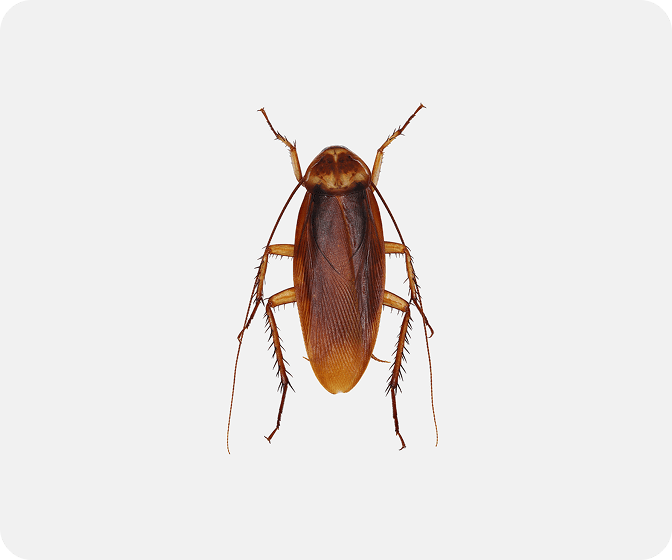
Measuring up to two inches in length, adult American cockroaches are reddish-brown or mahogany-colored with a yellowish figure 8 pattern on the back of the head. Cockroach nymphs resemble adults, but are wingless and gray-brown in color.
American cockroaches are capable of squeezing into extremely tight spaces, and are one of the fastest-running insects, with record speeds of 3.4 miles per hour, which would be comparable to a human running 210mph.
Roaches are usually looking for 3 main things if they enter your home: food, water, and shelter. Cockroaches aren’t picky, and will feast on food scraps, grease, pet food, and almost anything else edible. American cockroaches are typically found in warm, moist environments, making kitchens, basements, and sewers great homes for these bugs. Storage areas like garages, pantries, and basements provide the necessary environment for roaches to thrive.
Roaches spend much of their time in bathrooms, drains, and dumpsters, making them efficient carriers of disease. They can spread 33+ types of bacteria, six kinds of parasitic worms, and at least seven other human pathogens, picking up germs on their legs and bodies as they crawl through sewage or decaying matter and transferring them onto food surfaces. Bites from American cockroaches are uncommon and usually occur only in severe infestations when food is scarce; they typically cause minor irritation with no lasting effects.
Though American cockroaches have wings, they rarely fly unless temperatures exceed 85 degrees.
Early signs of a cockroach infestation may include strange smells, smears or droppings in or around kitchen appliances, new allergy symptoms, and one to two cockroaches scurrying around, usually at night.
Indications that you may have a larger infestation include stronger pungent, oily odor in storage areas, brown leathery egg casings behind or around furniture, damage and chewing marks to food and packaging, and seeing roaches during the day. For every roach you do see in your home, there are likely many more hiding.
To learn more about what cockroaches smell like, read our blog post on common pest smells.

In addition to regularly cleaning kitchens and dining areas, wipe down surfaces to remove crumbs and spills, alongside washing dishes promptly. Also make sure you’re storing food properly by keeping food in airtight containers, avoiding leaving pet food out overnight, and regularly disposing of garbage.
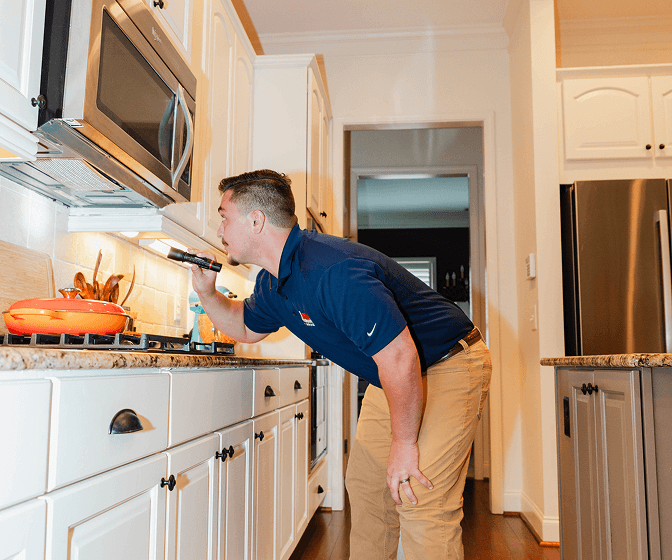
First, identify the problem, locate areas of activity and signs of the infestation.
Mon – Fri: 8:00 AM – 5:00 PM
Don’t share your home with pests! Schedule a free inspection with a Hughes Exterminators professional.
Get a Hughes Exterminators professional at your door quickly by locating a service center near you.